FUNDING
NUCNet provides funding to advance the understanding and deployment of NUCs in the UK, strengthen community engagement, and support impactful research. We have three types of fund that NUCNet members can apply for:
Interdisciplinary research grants | Career development top-up fund | School-related research top-up fund
Click links above to jump to funding details
Round 1 funding call has closed for interdisciplinary research grants and school-related research top-up fund
The career development top-up fund is accepting applications
Equality, Diversity and Inclusion
At NUCNet, we are committed to fostering an inclusive environment through an effective Equity, Diversity, and Inclusion (EDI) framework that benefits our community.
At the application stage for all funds, applicants will be asked to complete our EDI survey. We ask diversity monitoring questions to understand the diversity profile of our awardees. NUCNet will share this data as part of our post-award reporting process to BBRSC. EDI survey responses are anonymous and not shared with assessment panels.
The data collected will also be used to help NUCNet identify areas for improvement as well as understand the effectiveness of our procedures in eliminating discrimination. Data collection will be carried out in line with relevant Data Protection laws and the University of Southampton’s Data Protection Policy.
For any funding queries, please contact the NUCNet Manager via the contact page on this website
Interdisciplinary research grants (£2000 to £10,000)
Round 2 funding opportunities will be launched in 2027. Check back regularly for the latest updates and announcements.
NUCNet interdisciplinary research grants are intended to support projects that seek to enhance the utilisation of novel and underutilised crops (NUCs) in UK production systems. Projects should seek to address barriers to the adoption of these crops across the food or feed value chains or highlight benefits of including these crops in farming systems by working across disciplines or stakeholders.
NUCNet is pleased to offer NUCNet members, based in the UK, up to £10,000 (funded at 80% fEC) from the BBSRC.
All funding requests will be considered and ranked based on their merit and several criteria
What are NUCs?
Novel and underutilised crops (NUCs) are those currently rarely grown in the UK, but with great potential as an alternative food source.
What are NUCNet’s goals?
Please read NUCNet’s goals listed on the About page of this website before making an application.
Interdisciplinary is defined as:
Two or more distinct disciplines e.g different academic disciplines such as mathematics and biology or economics and biology
Funding summary
Eligible project types:
- Generation of preliminary data for larger research bids
- Projects interacting with industry
- Projects interacting with schools or NGOs
- Public engagement
- Integration of socio-economic science
The maximum award is £10,000 with funds awarded at 80% full economic costs (fEC). Funding will not cover cost of equipment, article processing/publication charges (covered by UKRI open access block grants), or international travel.
We do not expect all projects to include an industrial partner, but you will be expected to explain potential industry interest in your idea. If you wish to partner with industry, we expect industry to make at least a 40% matched contribution (of the 100% fEC rate). This industry contribution can be cash, in-kind or a combination of both. Projects with industry co-funding will be prioritised if they score the same as another project without industry co-funding.
Key Dates
Deadline for applications: Information on future funding application deadlines will be published here when available.
Application, guidance and FAQ
Links will be live when the next funding round call opens
Career development top-up fund (up to £1000)
ACCEPTING APPLICATIONS
NUCNet Career Development top-up funding is intended to support short secondments or research exchanges to academic institutions, NGOs, parliament or similar and and attendance on courses related to Professional Development that develop ECRs research identity and enhance their personal development.
NUCNet is pleased to OFFER NUCNet ECR members, based in the UK, up to £1000 from BBSRC.
All funding requests will be considered and ranked based on their merit and several criteria.
What are NUCs?
Novel and underutilised crops (NUCs) are those currently rarely grown in the UK, but with great potential as an alternative food source.
What are NUCNet’s goals?
Please read NUCNet’s goals listed on the About page of this website before making an application.
Funding summary
This award may be used for :
- Short secondments or researcher exchanges to academic institutes, NGOs, parliament or similar. Purpose of exchange or secondment should align with the goals of NUCNet (see https://novelcropnetwork.ac.uk/about-nucnet/). Max visit duration is 3 months.
- Training course or workshop attendance.
Requests for up to £1000 can be made to NUCNet at any time during the funding award period for e.g. registration, economy travel, accommodation. Additional funds can be made available to cover childcare* or other caring responsibilities. *Additional childcare costs incurred as a result of the activity, rather than ongoing baseline costs.
Priority will be given where this fund is a top-up fund and is not the only source of funding (commensurate with career stage and existing funding), although this will be evaluated on a case-by-case basis.
Key Dates
There is no application deadline. This is a rolling call, available throughout the 3-year NUCNet grant duration. Applications will be reviewed on a bimonthly basis by the Network Leadership Team. Submit well in advance, we recommend at least 4 months before travel, but not more than 9 months before the expected travel date.
Application and guidance
Links will be live when the next funding round call opens
Awarded Projects
Funding Award Recipients
NUCNet has announced the first projects to receive funding through its first funding call. These awards support innovative interdisciplinary research, knowledge exchange, and engagement activities that align with NUCNet’s goals, while helping members develop new collaborations, research capacity, and impact.
Interdisciplinary research grant round 1 projects
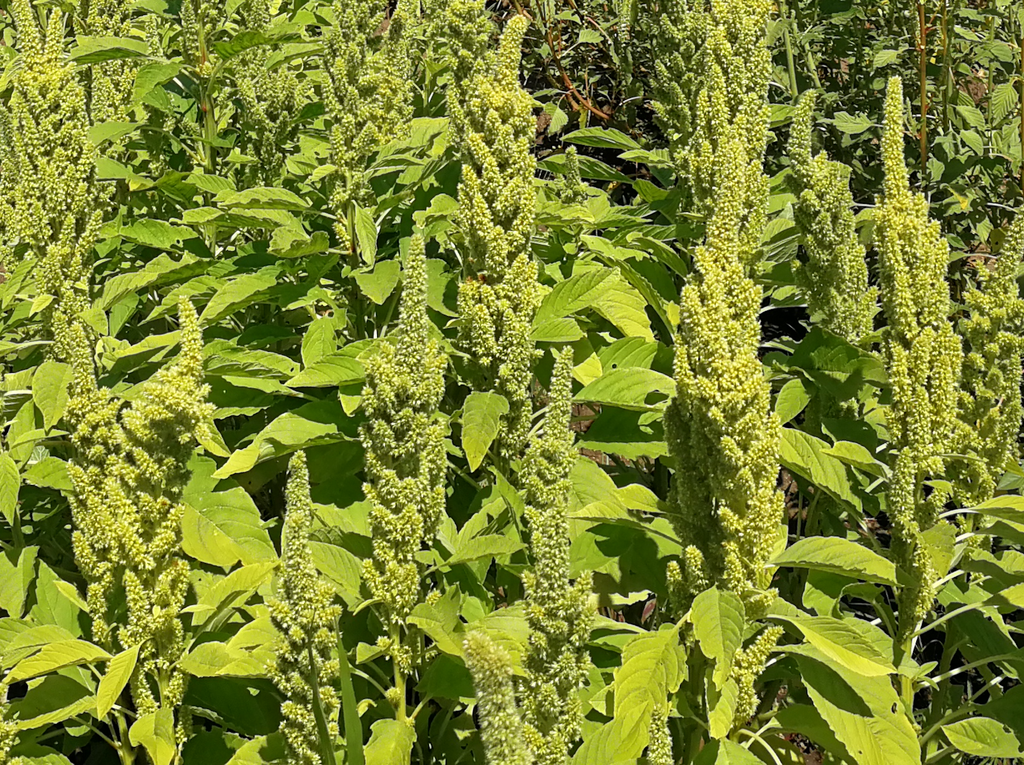
Evaluation of Amaranth diversity for cultivation in the UK
Project Lead: Katherine Denby, University of York
Co-investigator: Pallavi Singh, University of York
Other Partners: Stephen Jones, British Quinoa Company and Mikhail Glik, Amaranth Labs
UK agriculture faces challenges from climate change, declining agrobiodiversity and the need to produce nutritious food with fewer inputs. Amaranth is a water-use efficient underutilised crop with gluten-free grain rich in protein, fibre and minerals. We will assess varieties for their potential as a novel crop for a warmer and more drought-prone UK climate.
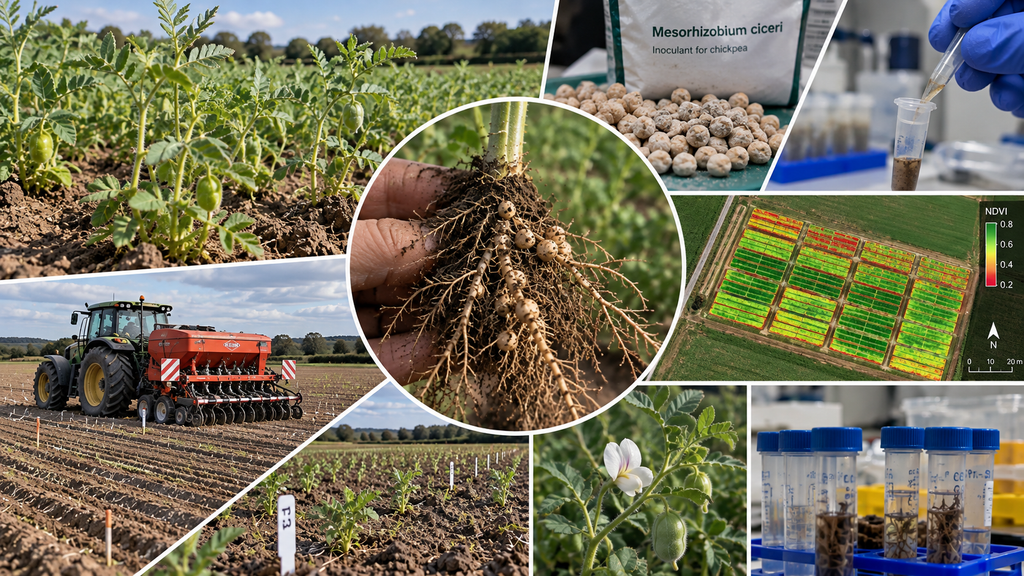
Evaluating Spring Chickpea Phenology, Agronomy and Rhizosphere Microbiology under Contrasting Seed Densities and Microbial Inoculation Strategies in the UK – On-farm approach
Project Lead: William King, University of Southampton
Partner investigator: Ahsan Niaz, Independent/Envirofield
Other partners: James Price, Perdiswell Farm; Bryan Limerick, Lallemand Plant Care
Chickpea is a promising crop to diversify UK agricultural systems, but their uptake is limited by several challenges. We will perform an on-farm trial to assess how seed density and different rhizobial inoculant delivery methods impact chickpea establishment, development, and yield in UK soil. Our project combines agronomy, microbiology, and farmer-industry knowledge.
Home from Home – identifying underutilised crops for communities
Project Lead: John Hammond, University of Reading
Co-Investigator: Deepti Angra, University of Reading
Other partners: Krishna Neupane, Integrated Research and Development Centre (IRDC); Rodrigo Echegoyen-Nava, Elsoms Seeds; Kate McEvoy, RealSeeds
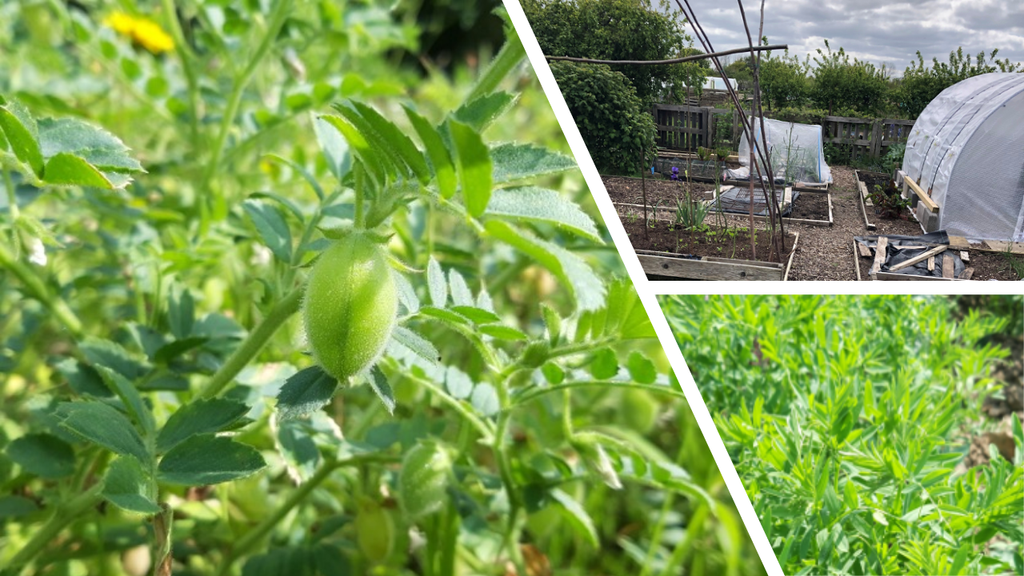
This project explores whether nutritious crops commonly grown and eaten in South Asia could also thrive in the UK. Working with Nepalese communities, researchers will test selected crops, document growing and cooking knowledge, and share findings through public events. The aim is to support a more diverse, culturally relevant and resilient UK food system.
New insights on novel and underutilised UK crop-insect interactions

Project Lead: Michael Garratt, University of Reading
Co-Investigators: Charlotte Howard, University of Reading
Other partner: David McNaughton, Soya UK
Novel and underutilised crops offer opportunities to build a more resilient UK food system, but their pollination and pest risks remain poorly understood. We will combine field observations with farmer perspectives to provide essential baseline evidence, helping anticipate emerging challenges and inform future research and sustainable crop adoption.
Prompter Pulses: a genetic approach to developing UK-adapted chickpea
Project Lead: Phil Howell, NIAB
Co-Investigator: Abhimanyu Sarkar, Viridian Seeds Limited
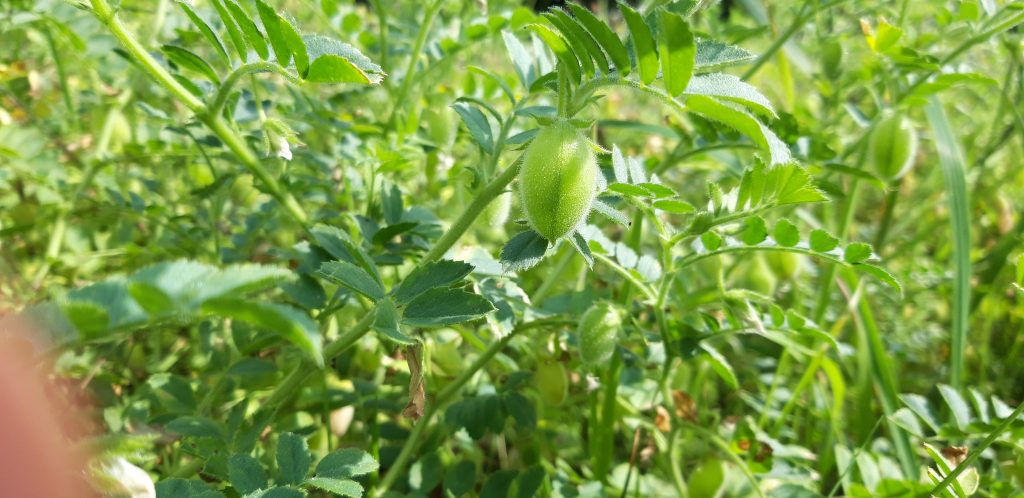
The UK annually imports around 60,000 tonnes of chickpeas. Niab has been investigating its domestic potential as a low-input, nitrogen-fixing legume crop, demonstrating that it grows well on lighter land, especially in relatively hot and dry growing seasons, but with a risk of crop failure in cooler / wetter summers. Accessions within NIAB’s diverse chickpea collection previously noted to show contrasting flowering and maturity will be grown under controlled growth conditions and in the field. We will also explore sequence diversity in these lines at genes implicated in the control of determinacy and the flowering time pathway.
School-related research top-up fund round 1 projects
Ongoing Novel Crops
Project Lead: Josephine Brennan
School: St Anne’s Catholic School
This project will enable students to continue exploring novel and underutilised crops through practical growing experiments. Building on previous trials with pea, sunflower and lablab, students will investigate their potential for future UK cultivation, contribute useful observations, and strengthen links between hands-on learning, climate change, Science and Geography.
Career development top-up fund
Awarded to David Evershed, Postgraduate Researcher, IBERS, Aberystwyth University
For attendance at the 4-day International Oat Conference 2026, Pucón, Chile
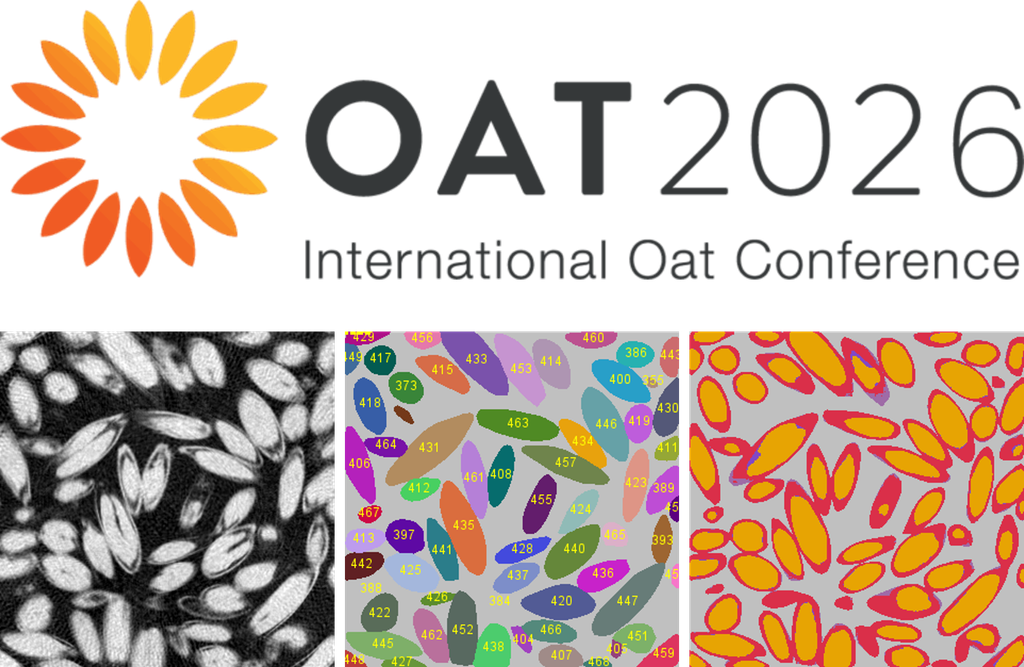
NUCNet support has enabled my attendance at the 2026 International Oat Conference in Pucón, Chile, where I will present my research on oat grain analysis using X-ray micro-computed tomography (µCT). Beyond disseminating these findings, the conference provides an opportunity to engage with researchers, breeders, and industry representatives from around the world, exchange knowledge on current challenges and opportunities in oat production and utilisation, and develop relationships that could lead to future collaborative research. The insights and connections gained will help strengthen ongoing research and contribute to wider efforts to improve the understanding and utilisation of cereal crops within sustainable food systems.